The Studio École de France: the school that built my voice no longer exists
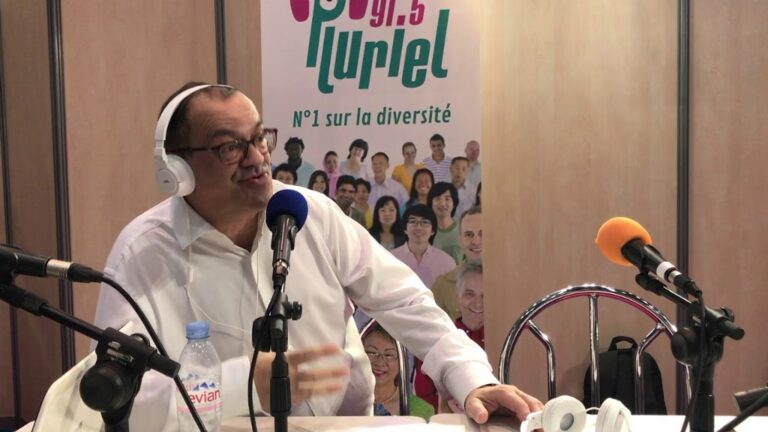
I don’t know how you heard the news. For me, it landed one morning between two lines of code. March 2024. Judicial liquidation. The Studio École de France closes its doors. Forty-one years of history. Gone.
I put down my screen. Looked out the window. And for a few seconds, I was twenty again.
Thirty thousand euros for a dream
You have to understand what this school represented. For a kid coming out of three years as a kitchen apprentice, who had saved every note from a thousand-euro monthly salary, who had even borrowed from the bank with his mother’s help — though we didn’t borrow the full amount, just the extra I was missing for the second year, because I paid for the first year myself.
In 1999. When you come from Jouy-en-Josas, right next to Versailles but certainly not living the castle life, with a vocational diploma and announce to your family that you want to work in radio, people look at you like you’ve lost your mind.
I worked a year in security to make up the difference. A year guarding doors, counting hours, telling myself: every sleepless night brings me closer to the microphone.
And then one day, I pushed open the door in Boulogne-Billancourt.
Sylviano Marchione
That was his name. The director. An Italian name, a firm handshake, a gaze that assessed in three seconds whether you were serious or wasting everyone’s time.
He looked at me, my file in hand. Vocational diploma in cooking. Zero experience in media. Nothing that justified my presence, really.
He asked me: « What is someone who was a cook doing in a radio school? »
I answered that I was hungry for life. That I wanted to learn.
It wasn’t very convincing. But it made him smile.
He let me in.
This man ran that school for forty years. Forty years of opening doors to kids who had nothing but desire. People like me. People nobody was expecting anywhere.
Jacky Gallois and the voices we heard on the radio
Inside, it was another world. The corridors smelled like a studio — that peculiar scent of soundproof carpet and warm equipment. And the teachers weren’t teachers. They were voices. Voices you heard every day when you turned on the radio.
Jacky Gallois. The man had helped create NRJ — think of it as France’s Capital FM or iHeartRadio’s KIIS-FM. The biggest hit music station in the country. He was there, in front of us, explaining how to place your voice, how to create emotion with three seconds of silence. Other hosts we listened to religiously every morning came to correct our intros.
It was surreal. Like a kid passionate about football suddenly training with Beckham.
I spent two years in that school. Two years waking up every morning with the certainty that I was exactly where I needed to be. For the first time in my life.
The same school as Michaël Youn
Something I learned later: the Studio École de France also trained Laurent Mariotte (France’s equivalent of a Jamie Oliver-type TV food presenter), Michaël Youn (one of France’s biggest comedy actors), Fanny Agostini (weather presenter on TF1), Romano from Skyrock radio, and Julien Fébreau from Canal+.
We’d all walked the same corridors. Used the same microphones. Been assessed by the same Marchione at the entrance.
There was something powerful about it. A voice factory. A place that took nobodies and taught them to exist in people’s ears.
What the numbers say
When I was at NRJ, between 2002 and 2006, radio was a beast. To understand the scale: NRJ was France’s number one radio station — imagine Capital FM and BBC Radio 1 combined into one dominant force, or iHeartRadio’s KIIS-FM at its peak but with national reach. 13.4% cumulative audience. Thirteen million daily listeners for the group. One hundred million euros in profit in 2005 alone.
Radio was THE medium for young people. There was no TikTok. No Instagram stories. No twenty-year-old filming himself eating pasta and getting three million views.
When you went on air, the entire country heard you. It was massive.
And now? September 2025. NRJ: 6.7% audience share. Its worst season ever. 3.8 million listeners. The station has been cut in half. In twenty years.
For context: it’s as if Capital FM in the UK went from 9.2 million weekly listeners to under 5 million. Or if iHeartRadio’s top CHR stations suddenly lost half their audience to Spotify and TikTok. That’s what happened to French radio.
French radio as a whole loses 720,000 listeners per year. Le Point newspaper wrote: « Radio continues to pay dearly for the battle of attention, increasingly captured by social media and on-demand content. »
Historic lows. Lower every single year.
Why a radio school closes in 2024
I wasn’t in the offices when the decision was made. I don’t know the accounts. I don’t know what exactly happened in the final years.
But I can suppose one thing.
When a medium loses half its audience in twenty years, when eighteen-year-olds dream of becoming influencers rather than radio hosts, when a phone is enough to reach more people than a national broadcast — who still enrolls in a radio school at thirty thousand euros a year?
The question stands. And it hurts.
I’m not judging. Marchione held that school together for forty years. He trained generations of voices. He gave me my chance when nothing on paper justified it. I owe him a part of who I became.
But the world changed. And sometimes the world changes faster than institutions can follow.
The loop
The strange thing is that I followed exactly the turn that the school didn’t take.
Radio. Then internet — when I created France Je Te Quitte in 2016, « travel influencers » didn’t exist yet. Then tech — when I founded Komby, SaaS and AI were still words most entrepreneurs didn’t understand.
Each time, I felt the ground shifting beneath my feet. And each time, I jumped to the next plate before the old one collapsed.
The school that trained me didn’t jump. It stayed on the plate. And the plate sank — but it’s in no way the fault of its director, who is a lovely man.
What remains
The voices remain. Those still on the radio — fewer every year. Those that became podcasts, YouTube channels, streaming shows. The craft isn’t dead. It changed shape. Like water moving from river to cloud.
Gratitude remains. For a director who let me in. For a teacher who taught me that silence is more powerful than words. For a school that no longer exists but still lives in the voice of everyone who passed through its studios.
And this lesson remains, one I’ll never forget:
It’s not talent that makes you survive. It’s the ability to feel the wind turning. And to turn with it.
The Studio École de France was founded in 1983. Sylviano Marchione ran it for nearly 40 years before retiring on April 30, 2022. Jacky Gallois left the same year. Five months after their departure, the company Eurodio that operated the school was declared insolvent. Judicial liquidation was pronounced on March 27, 2024.
The name was bought by a private education group. But the voices are gone.
The school held as long as the men who built it were there. That says everything.
Thank you Sylviano, for everything.
French entrepreneur, expatriate since 2016. From radio to tech, from Bangkok to London via Hong Kong and Montreal. Founder of Komby (SaaS/AI). This blog tells the journey.