The early days of Believe seen from the inside
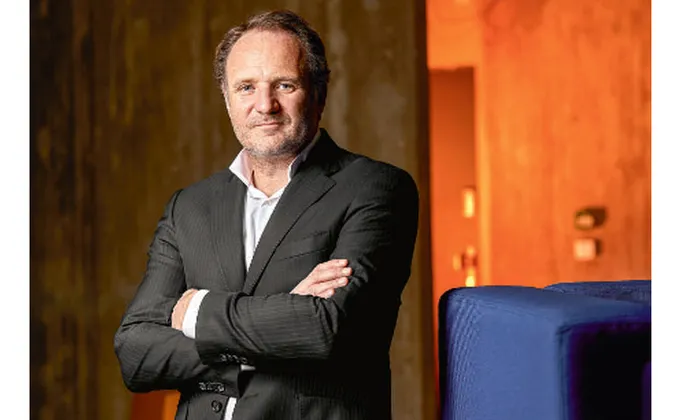
There are encounters that are unlike anything at the time. No spark, no violins, no “I feel like this guy is going to change the world.” Just two people in a room, a conversation, and a seed that is planted without us realizing it.
My meeting with Denis Ladegaillerie in 2005 was exactly that.
A former Vivendi lawyer in his living room
To understand who Denis Ladegaillerie is, you have to rewind. Born in 1969 in Limoges, son of an oil industry executive, he grew up in Normandy. Law in Rouen, management at ESCP, a master’s degree at Duke University in North Carolina, then a career as a business lawyer in New York.
At the end of the 90s, he watched his roommates – guys well established in finance – leave everything in six months for unknown startups. Intrigued, he joined Vivendi in 2000, where Jean-Marie Messier bought everything related to digital. At Vivendi Net, he dissects “hundreds of Internet deals”. Then he was sent to Los Angeles, to MP3.com – the ancestor of SoundCloud – which Vivendi had just bought.
When the bubble burst and Fourtou scuttled digital assets at the end of 2004, Denis was 32 years old, with a sharp eye, and “the most expensive master’s degree in the world” in his pocket – in his own words. A kitesurfing accident repatriates him to France. A helping hand from destiny.
In 2005, he created Believe. In his living room. In Paris. With Arnaud Chiaramonti, former marketing boss of Sony Music France, and Nicolas Laclias.
Scooters, hard drives, and 30 euros
Believe in its beginnings, it’s not an office in a tower. It’s interns, scooters to deliver Fnac and Virgin, CDs that we digitize on the assembly line, and hard drives that we send by FedEx to American distributors.
Their first operation? A compilation for Virgin Megastore during the Fête de la Musique. Benefit:30 euros. “We were extremely proud,” Ladegaillerie would later recount.
This guy, with his provincial notary air and his strict suit, was quietly building what would become the fourth major music company in the world. But in 2005, to the outside world, he was just a converted lawyer wasting his time in a Parisian salon.
The triple bet that no one understood
What struck me when I met Denis was the clarity of his thesis. While everyone around was screaming about the death of music — major labels taking kids to court for downloading three songs on LimeWire — he anticipated three things:
- The disappearance of the CD— inevitable, a matter of time
- Lower production costs— which would open the door to millions of independent artists
- The emergence of a new economic balance— streaming would end up paying off
A triple bet “very daring at the time”, as Sandrine Dufour, former boss of Vivendi Net, would later say. “The first digital model was piracy. We only paid for the phone ringtones. »
Denis didn’t care. He saw further.
The room where I met him
At that time, I came from radio. I spent years interviewing artists, looking at the music industry through the window of the NRJ studio. But one desire is working within me: to create. Produce. Releasing my own music. The idea of a label germinated somewhere in the back of my mind.
And now I find myself in front of a guy who has built exactly the bridge I need to take my music across to the rest of the world. Not Universal. Not Sony. An independent. With a global infrastructure.
What struck me was not the charisma — Denis is not one of those people who takes up all the space in a room. It’s calm. Conviction without noise. While the others were panicking, he was laying bricks.
What happened next
The Parisian salon has become a multinational:
- 2009: Believe is profitable. Four years, less than €2M in cumulative losses. Launch of Zimbalam, a self-production platform that detects talents
- 2012: Apple lists them in 53 countries for iTunes. In six months, the international dimension explodes
- 2015: Acquisition of TuneCore – the platform that brought Ed Sheeran to life
- 2016: Purchase of Naïve — Carla Bruni, Benjamin Biolay in the catalog
- 2017: Sony offers 400 million euros. Denis refuses
- 2020: 700 million turnover, 2,000 employees, contracts with more than 1 million artists, present in 45 countries. Winner of the Future Unicorns Trophy
- 2021: IPO on Euronext Paris.Valuation: 1.9 billion euros
- 2024: Repurchase by the EQT consortium for withdrawal from the stock market
A guy in his living room with 30 euros of first turnover. Nineteen years later: 1.9 billion.
What I took away from this meeting
I didn’t sign a contract that day. I didn’t launch my label right out of the room. But something has changed in my way of seeing.
If a former lawyer could create a global distribution network for freelancers from scratch from his couch—shipping hard drives by FedEx and delivering Virgin by scooter—then what was stopping me from doing the same thing on my own?
The answer: nothing. Except fear.
Three years later, in 2008, I foundedElectromix Records. And it is via Believe that my titles will be distributed in240 territoriesacross the world. The bridge that Denis had built, I crossed it.
The pattern
Looking back, this meeting is part of a pattern that defines my life:
Being in the room with the people who are going to change the rules of the game — before the world knows it.
David Guetta before the stadiums of 80,000 people. Denis Ladegaillerie before 1.9 billion. An expatriation blog before TikTok invented “digital nomads”. A digital agency for businesses before AI makes humans optional.
Pascal Nègre, the former boss of Universal France, said of Denis: “He is a visionary. He realized very early on that a purely digital model could very quickly work in music. »
I was in the room when all this was still just a conviction whispered in a Parisian living room. With Komby, this time I will not be a spectator of the transformation. I will be the one who wears it.
Next article: Why I started Electromix Records — from radio to label, how a former chef distributes his music in 240 countries.

French entrepreneur, expatriate since 2016. From radio to tech, from Bangkok to London via Hong Kong and Montreal. Founder of Komby (SaaS/AI). This blog tells the journey.