Between life and death, visiting Varanasi* is like the city of joy!
How to describe this city to you? Telling you that it’s a shock to see the dead pass you by? How do you explain that the locals smile on the street corner after a funeral procession? Visiting Varanasi is like being in the apocalypse of conflicting emotions. It made me think of Delhi again but less oppressive and more joyful. After a few hours, I thought of the City of Joy, with Patrick Swayze. Ok the story of the film takes place in Calcutta, but I had this feeling in these first moments. When you walk along the Ganges or “Ganga in English”, silence is your traveling companion. Peace, tranquility and various thoughts guide you along the Ganges until you come across strange events.
An unshakeable faith, and a path of peace
My first day was actually late afternoon after a 14-hour train ride from Khajuraho. It’s long, very long but the reward is worth the journey. I unpacked my bag and stayed in this small Indian family guest house for €5 a night with minimum comfort. I plan to film and take photos and I’m asking the English about the local agenda. I can already tell you that if you want to see the ceremonies, you will have to avoid sleeping in. It is at the Assi ghât that the first processions take place around 5:30 a.m. Attending ancestral rituals is a magical moment because the choreography is spiritual, graceful and relaxing. Hindu monks who look like Buddhist monks present their show which has remained the same for years.
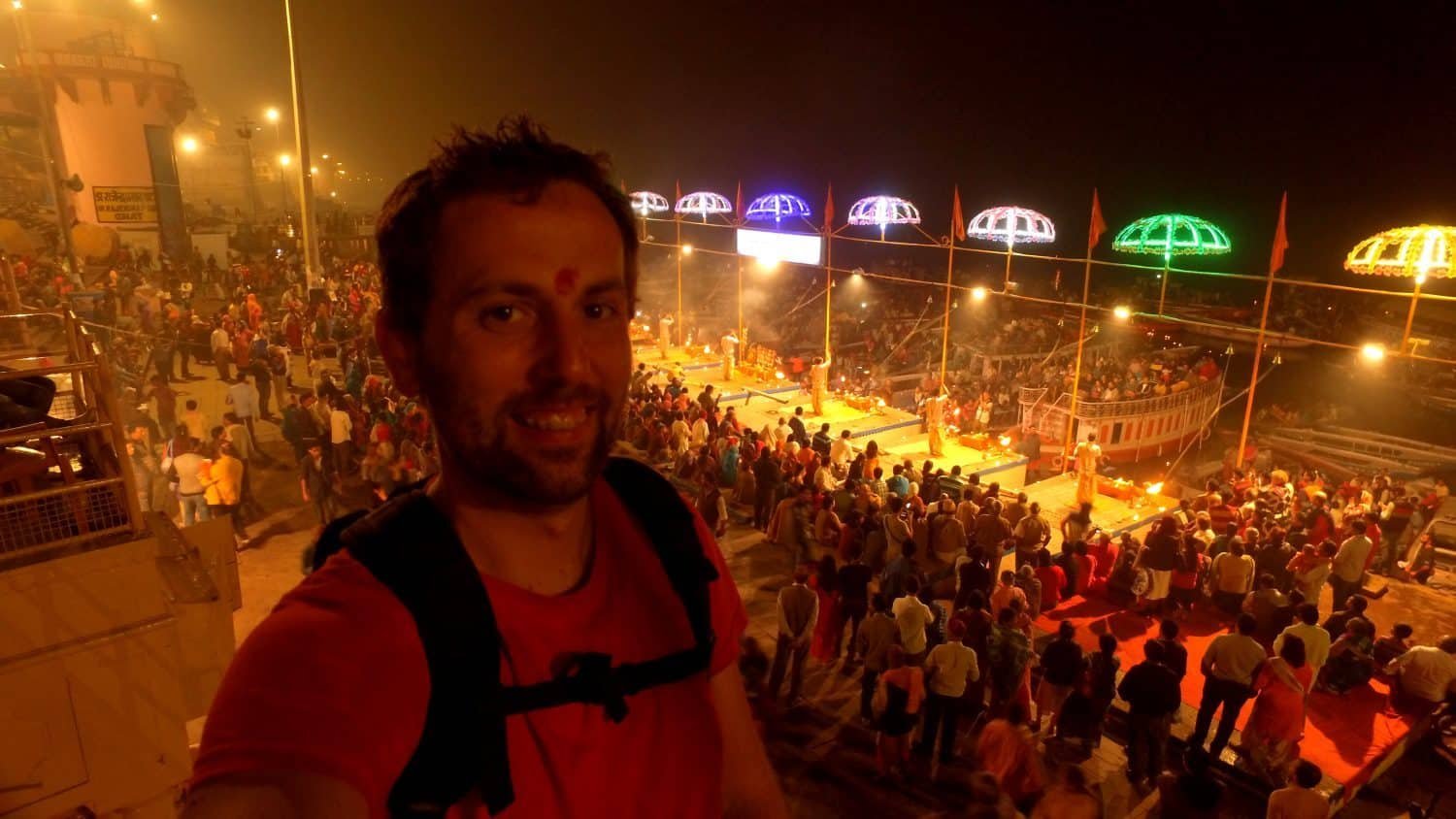
I took the photos which you can see below. I write these lines as if it were a vision that I could describe to you up to the second in real time. I think I can’t do better than to tell you: visit Varanasi. Seeing these ceremonies, this unwavering faith in the Indian gods, and that death is only a stage of life is something astonishing.
Why visit Varanasi?
If you visit Varanasi, it’s not to take a bath. Along the Ganges, you can try this experience but I do not recommend it. I saw Europeans doing it but I didn’t follow because I was already sick. If you want to limit the risk of skin infection, now is the time to go ahead and just take a look. If you come to this city, it is for the deep religious aspect and to seek the answer to this question: why do they do this? For centuries, Indians have honored their beliefs by the Ganges, a river which is said to be sacred to Europeans. But in fact the Ganges is just a means of washing away their sins. The Ganges is in no way sacred if you ask Indians like I did.
The Ghats to see to understand a little better
To honor their gods, Indians wash with water to purify their bodies by tradition. Although this water is dirty for us, it is in fact clean spiritually speaking. The different ghats on the banks of the Ganges that you will find are spread out over good strides. Precisely between the Assi ghat in the south and the “main” Dashashwamedh ghat it is a 2.5 kilometer walk. During the day, I often went back and forth between the two ghats and it was easy to enjoy the sun and the worship that took place at each ghat.
The one that struck me the most was undoubtedly that of open-air cremations. It is located between the two ghats that I mentioned above. The dead parade under white sheets and covered under orange and red carnations at the Manikarnika ghât. The bodies are then placed in the middle of the piles of wood to be burned in the open air. The ashes are then given to the family who decides to keep them, or to spread them in the Ganges. A disturbing and unusual moment for us. Don’t take photos because they are watching you.
In the evening to go to Dashashwamedh Ghat, you can take a boat from the north or the south. As for me, I took a boat on the way out from the Assi ghat and I walked on the way back. Count 300 rupees one way for a rowing boat. The goal is to join the main ceremony which begins at 6:00 p.m. and enjoy the joy and music that is available to you. Plan to be early as traffic jams are guaranteed in front of the Dashashwamedh Ghat. You can then dock to be closer to the actors.
What is a Ghat?
In India, a ghat designates the steps which cover the banks of basins or tanks and allow one to descend into contact with the water. In summer, the ghats are flooded by the rainy season, and I do not recommend this period to visit Varanasi. You have to wait 2 months after August to travel along the Ganges. After the rainy season, the Indians clean the banks of mud. They go there to wash clothes, purify themselves, do group ceremonies, the ghat is an important social place for all practitioners of the Hindu religion.
* Varanasi = formerly Benares.
In the store, find my EBOOK on India, and otherwise, you can buy one of these books:
[amazon_link asins=’2816152812,2816153924,2013301898,2013237014′ template=’ProductCarousel’ store=’francejetequi-21′ marketplace=’FR’ link_id=’9ebe31ca-58e1-11e7-931d-b3c81c300c02′]